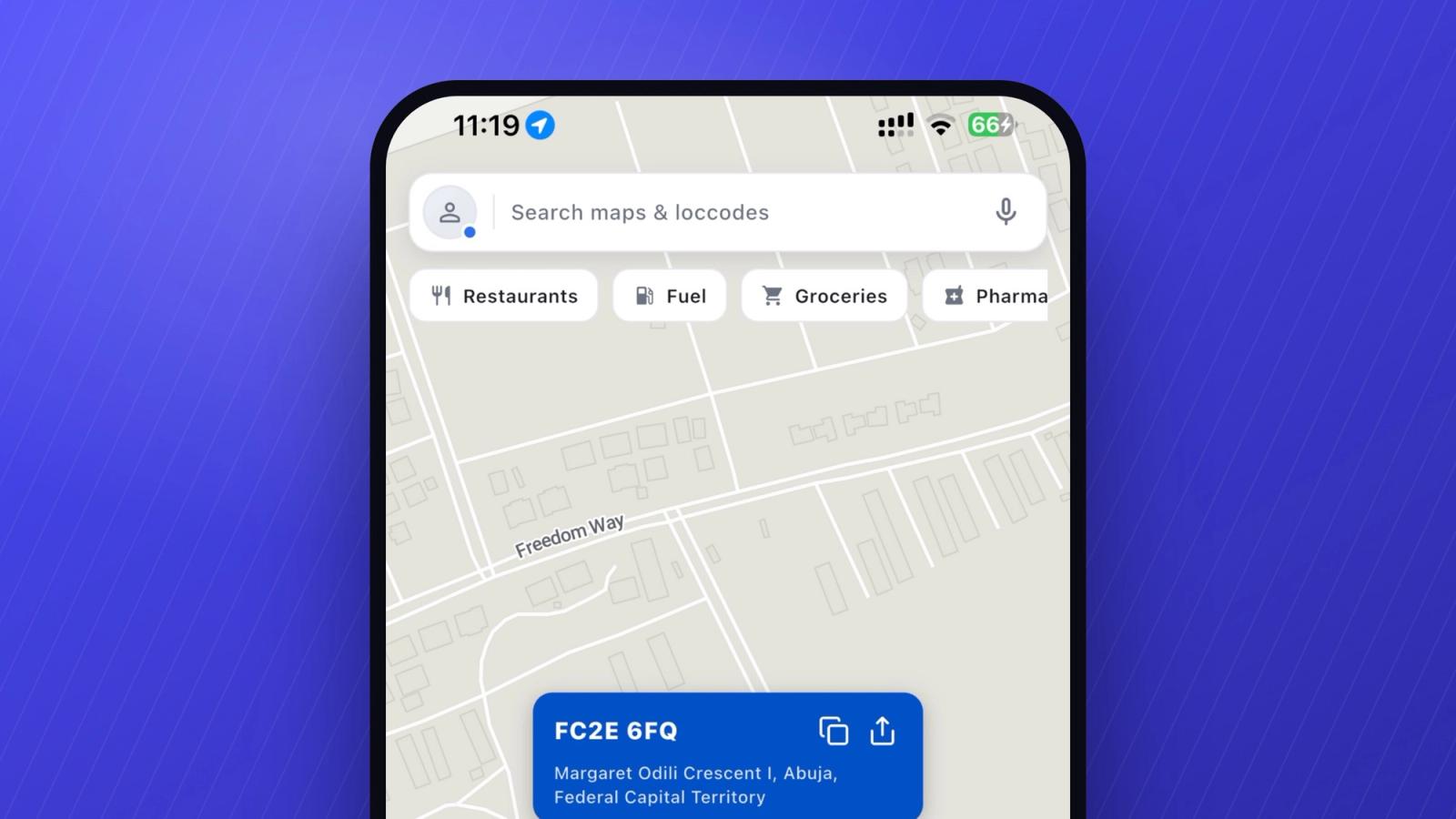
A loccode is a short, unique code assigned to every street in Nigeria, giving it a single, stable reference that any address on that street sits underneath. Instead of describing a location with directions like "opposite the red gate, second street after the roundabout," you share one code, something as simple as ED12A 1WD, and it points to the exact street in question.
That's the one-sentence version. The rest of this guide walks through what a loccode actually is, how it's different from the address tools you already know, and why Nigeria needed something built specifically for it.
Why Nigeria Needed a New Kind of Address System
Most digital systems, from delivery apps to bank onboarding forms, assume every place already has a formal, standardized address: a named street, a building number, a postal code that ties it all together. Across large parts of Nigeria, that assumption doesn't hold. Streets go unnamed. Numbering is inconsistent or missing entirely. The same location might be described five different ways depending on who's giving directions.
That's a workable system for a conversation between neighbors. It's a serious problem for a delivery rider trying to find a customer, a bank verifying an address for KYC, or an ambulance trying to locate someone at 2 a.m. Loccodes exist to close that gap: a way to give every street a name it can be found by, even if it never had one before.
How a Loccode Works
A loccode is generated for the street itself, not for GPS coordinates and not for a single building. Once a street has a loccode, every individual address on that street is registered underneath it. So when someone shares their loccode, it identifies their street with certainty; selecting the specific address from the list registered under that code identifies the exact spot.
Notable standalone places also get their own loccode, even if they aren't part of a typical street. The National Assembly Complex and Aso Villa are both examples of locations that may carry a dedicated loccode of their own, separate from the street-level system.
What Makes a Loccode Different From a Regular Street Address
A traditional street address depends on infrastructure that has to exist first: named streets, numbered buildings, a postal system that ties them together. A loccode doesn't wait for that infrastructure. It's generated directly from the street itself, so both formal, well-mapped roads and informal, unnamed ones can have a loccode, with individual addresses registered underneath as people add them.
That's the core difference. A street address describes a place using a naming system that has to be built in advance. A loccode identifies a place directly, whether or not that naming system was ever built.
Is a Loccode the Same as What3Words or Google Plus Codes?
A loccode serves a similar general purpose to tools like what3words or Google Plus Codes: giving any place a shareable, unique reference. But it's built specifically for Nigeria's addressing environment, including informal settlements and areas where the physical landscape changes quickly. It's designed for local context first, using human-usable codes rather than arbitrary word combinations or long alphanumeric strings that carry no local meaning.
Who Actually Uses Loccodes
- Individuals use the Maiaddy app to discover their street's loccode and share it instead of typing out paragraph-long directions to friends, family, or delivery riders.
- Logistics and delivery teams use loccodes to give riders a single, verifiable reference for every customer, cutting down on the phone calls and wrong turns that come from ambiguous directions.
- E-commerce platforms use loccodes at checkout: a customer enters their street's loccode, selects their specific address from a dropdown of addresses registered on that street, and the rest of the form auto-fills.
- Banks and fintechs use loccodes for address verification during KYC, since each street's code is unique and stable over time, giving them a consistent, auditable record.
- Developers integrate the loccode API directly into their own address forms, so their users get the same verified, standardized experience without building an addressing system from scratch.
Does a Loccode Ever Change?
No. Loccodes are designed to stay stable over time, so the same location keeps the same code even as the surrounding area develops or changes. That stability is what makes them useful for things like KYC records and long-term delivery logistics, where a shifting reference would create more problems than it solves.
Who Created the Loccode System?
Loccodes were created and are maintained by Maiaddy, a Nigerian location-identity infrastructure company. Maiaddy documents and shares the specification publicly to support broad adoption across logistics, finance, government, and technology platforms, rather than keeping it as a closed, proprietary format.
Frequently Asked Questions
What is a loccode in simple terms?
It's a short, unique code for a street in Nigeria. Sharing it tells someone, or a system, exactly which street you mean, and your specific address is registered underneath it.
How do I find my loccode?
You can find your street's loccode through the Maiaddy app, available on the Google Play Store and Apple App Store. Open the app, confirm your location, and it shows you the loccode for your street.
Can two people on the same street have different loccodes?
No. Everyone on the same street shares that street's loccode. Individual addresses are registered underneath it, so entering the loccode brings up a list of addresses on that street to choose from.
Is the loccode system only available in Nigeria?
Maiaddy currently focuses on Nigeria, where the gap between physical addressing and digital systems is especially significant. The underlying model is designed to extend to other emerging markets with similar addressing challenges.
Is Maiaddy free to use?
Yes. The Maiaddy app is free for individuals to find and share their loccode, and the API businesses use to verify and standardize addresses is also free to integrate.
The Bottom Line
A loccode gives Nigeria something its addressing infrastructure has been missing: a way for every street, formal or informal, to have a single, stable, shareable identity. That single change ripples outward into fewer failed deliveries, simpler KYC checks, and an address you can actually say out loud instead of describing.
Want to see your street's loccode? Download the Maiaddy app, or explore the developer documentation if you're building loccode verification into your own product.