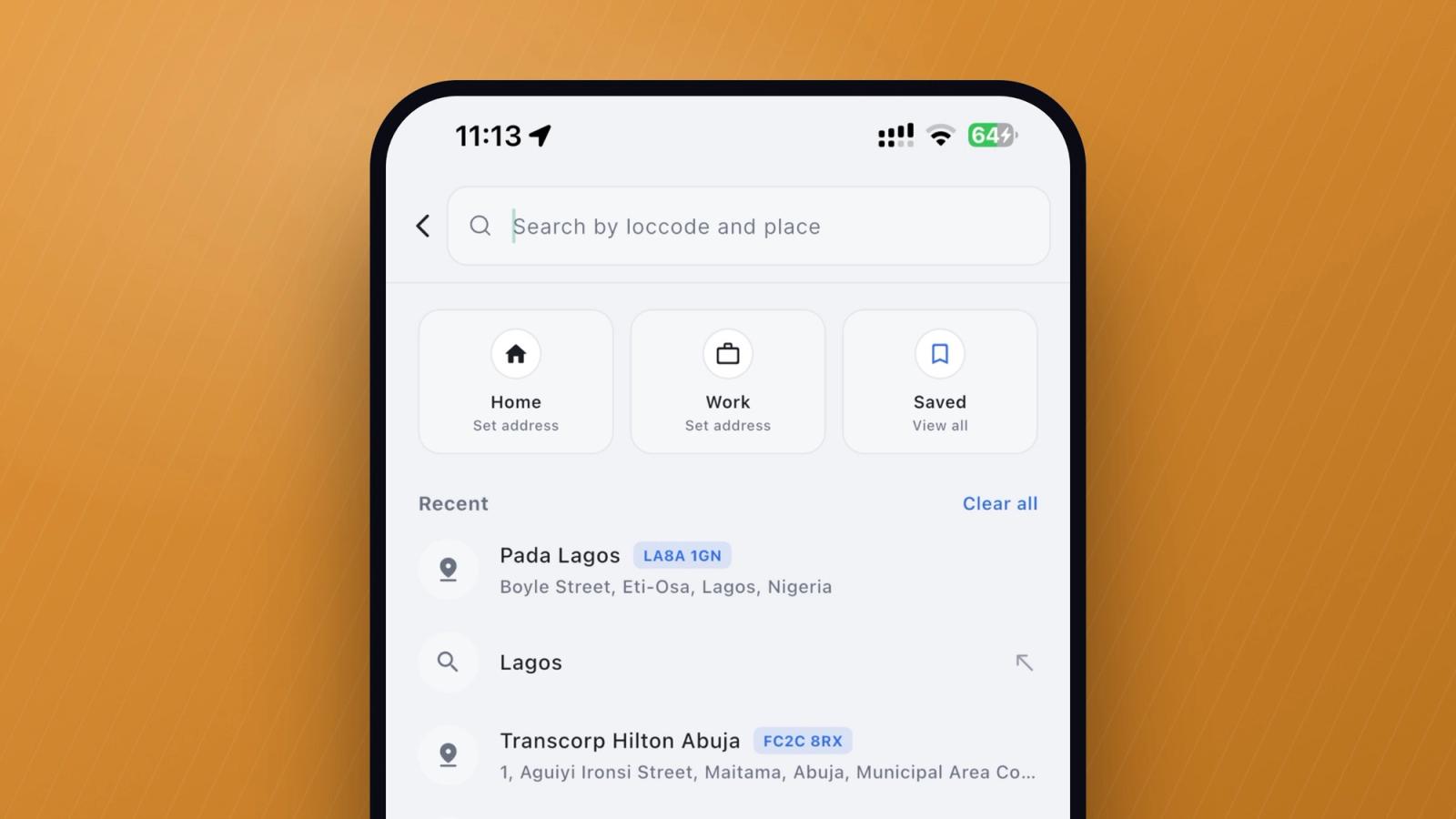
If you've ever tried to give someone directions in a place with no street name, you've probably heard of what3words. It's the best-known answer to a real problem: how do you point to an exact spot when there's no formal address to point to? Loccode, built by Maiaddy, solves the same underlying problem but takes a different approach, one built specifically for how Nigeria's streets, addresses, and delivery systems actually work.
Here's the short answer: what3words divides the entire globe into 3-meter squares and labels each one with three random words. A loccode is a short, unique code assigned to an actual street in Nigeria, with real addresses registered underneath it. One is a grid over the world. The other is a reference system built around how people already navigate: by street.
How What3Words Works
What3words takes the planet and divides it into roughly 57 trillion squares, each 3 meters by 3 meters. Every square gets a permanent three-word combination, like filled.count.soap. Say those three words, and anyone with the app can find that exact square anywhere on Earth.
It's a clever, genuinely global system. It doesn't care whether a place has a street, a name, or any infrastructure at all, since it's just laying a grid over coordinates. That's also its limitation for a market like Nigeria: the words are arbitrary. They don't map to anything a person already knows about the place, like which street it's on, what area it's in, or who else lives nearby. Two squares next to each other can have completely unrelated word combinations, so there's no way to infer anything about a location from its words alone.
How Loccode Works
A loccode starts from the street, not the grid. Every street in Nigeria, formal or informal, gets its own short alphanumeric code, something like LA8A 1FU. Notable standalone places, like the Muson Center, may get one too. Individual addresses on that street are then registered underneath the street's loccode.
So instead of memorizing or reading out an arbitrary three-word combination, you share a code tied to an actual place people recognize: a street. Enter that loccode into a form or the Maiaddy app, and every registered address on that street appears in a dropdown so you can select the specific one you mean. The result is a code that's short, human-usable, and grounded in the real geography of the area, not just a coordinate.
The Core Differences
- Basis of the system. What3words is grid-based: it divides space into equal squares regardless of what's actually there. Loccode is street-based: it's generated from real streets and real addresses, so it reflects how the area is actually organized and how people already give directions.
- Local context. What3words works the same way everywhere on the planet, which is its strength for global logistics but means it has no built-in awareness of Nigeria's specific addressing gaps, informal settlements, or rapidly developing urban areas. Loccode was purpose-built for exactly that environment.
- What the code tells you. A what3words address (three random words) tells you nothing about the location until you look it up. A loccode is tied to a specific street, so businesses working across many customers on the same street, like an e-commerce platform or a bank doing KYC, can group and verify addresses in a way that makes operational sense.
- Cost and access. What3words is free for individual use but requires a commercial license for many business integrations. Maiaddy's loccode API is free to integrate for businesses, including logistics companies, e-commerce platforms, and banks.
- Stability. Both systems are designed to be stable over time. A what3words square doesn't move, and a loccode doesn't change once assigned, so either system can serve as a long-term reference for a location.
Which One Should You Use?
If you need a universal system that works identically anywhere in the world, including remote areas with no streets at all, like a specific spot in a national park, what3words does that well. If you're navigating, delivering, or verifying addresses specifically in Nigeria, loccode is built around the way the country's streets and addresses actually work, which makes it a more natural fit for logistics, e-commerce checkout, and KYC use cases where you're constantly working with real streets and real customers, not arbitrary coordinates.
For businesses operating in Nigeria specifically, that difference tends to matter in practice. A rider, a checkout form, or a compliance team working with a loccode is working with something anchored to an actual street they can cross-reference, not a set of words that could describe any 3-meter square on the planet.
Frequently Asked Questions
Is Maiaddy the same as what3words?
No. Both give any place a shareable, unique reference, but loccode is generated from real streets in Nigeria, while what3words assigns three random words to a 3-meter grid square anywhere in the world.
Is loccode a replacement for what3words?
For addressing within Nigeria, loccode is designed to be a more practical alternative, since it's built around real streets and integrates directly with delivery, checkout, and verification workflows. What3words remains useful as a global, location-agnostic system.
Can I use loccode outside Nigeria?
Maiaddy currently focuses on Nigeria, where the gap between physical addressing and digital systems is especially significant. The underlying model is designed to extend to other emerging markets with similar addressing challenges.
Is loccode free to use?
Yes. The Maiaddy app is free for individuals, and the API businesses use to integrate loccode into their own systems is also free.